When an enterprise call route needs more than a department name
A department name can narrow a route. The caller’s operating context helps the organization decide whether that destination is the right next action.
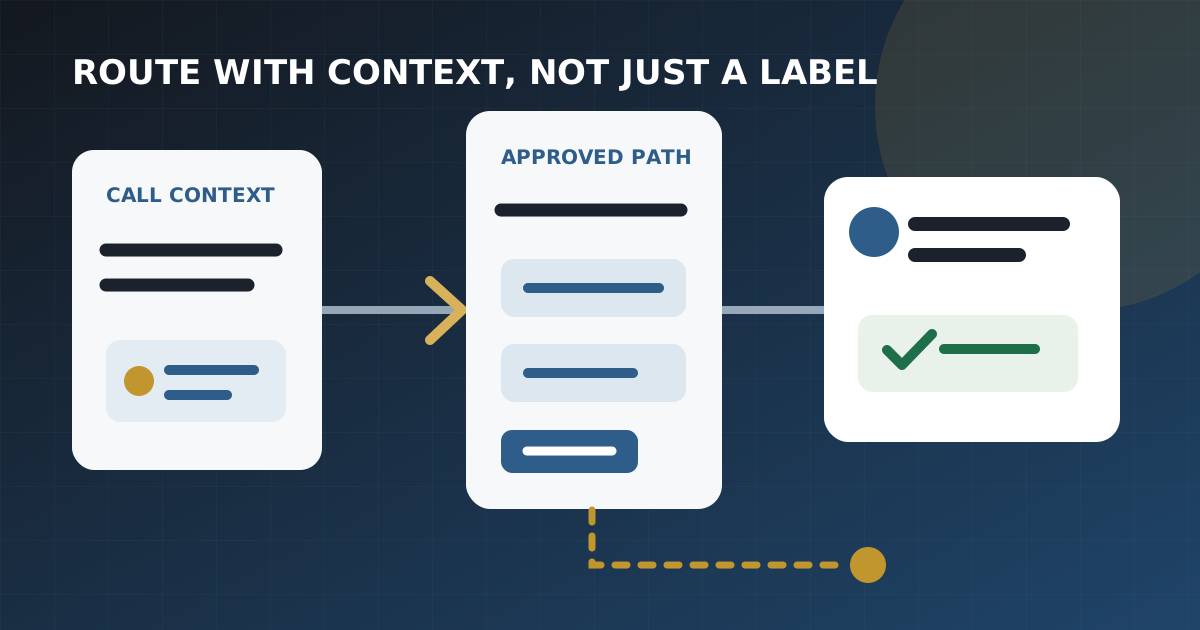
In a large organization, a caller may recognize a department name without knowing whether it is the right destination. A useful inbound route does more than match a label. It gives the organization a consistent way to understand why the caller reached out, what may change the route, and when a person should make the next decision.
Start with the reason for the call
Before choosing a department, define the few details that help distinguish a routine route from a request that needs a different path. The exact questions belong to the organization’s operating model, but they should help clarify the caller’s purpose and the context that affects the next action.
- the caller’s stated reason for contacting the organization;
- the service, team, topic, or relationship context that may affect the route; and
- the detail that signals an approved exception or a need for human judgment.
Use approved paths without flattening every request
Standard routes are useful when they reflect real operating decisions. The goal is not to make every conversation identical. It is to make the common paths clear enough that teams receive callers with relevant context and know when the normal route does not fit.
An enterprise route is more useful when it explains why a destination was chosen, not just where the caller was sent.
Make the exception route part of the design
Some requests will be unclear, cross more than one team, or need an owner to decide what happens next. Give those calls a visible human route and carry forward the context already gathered. The organization retains responsibility for the decision; the inbound design makes the handoff more deliberate.
Review route rules with the teams they affect
As teams, services, and responsibilities change, the organization can revisit the context that drives each path. That review keeps an enterprise route connected to the actual operating model rather than treating a department name as a complete answer.
Enterprise HD helps large organizations shape high-volume inbound operations around their own teams and routing rules. Explore How It Works, review the FAQ, or request an Enterprise HD briefing.