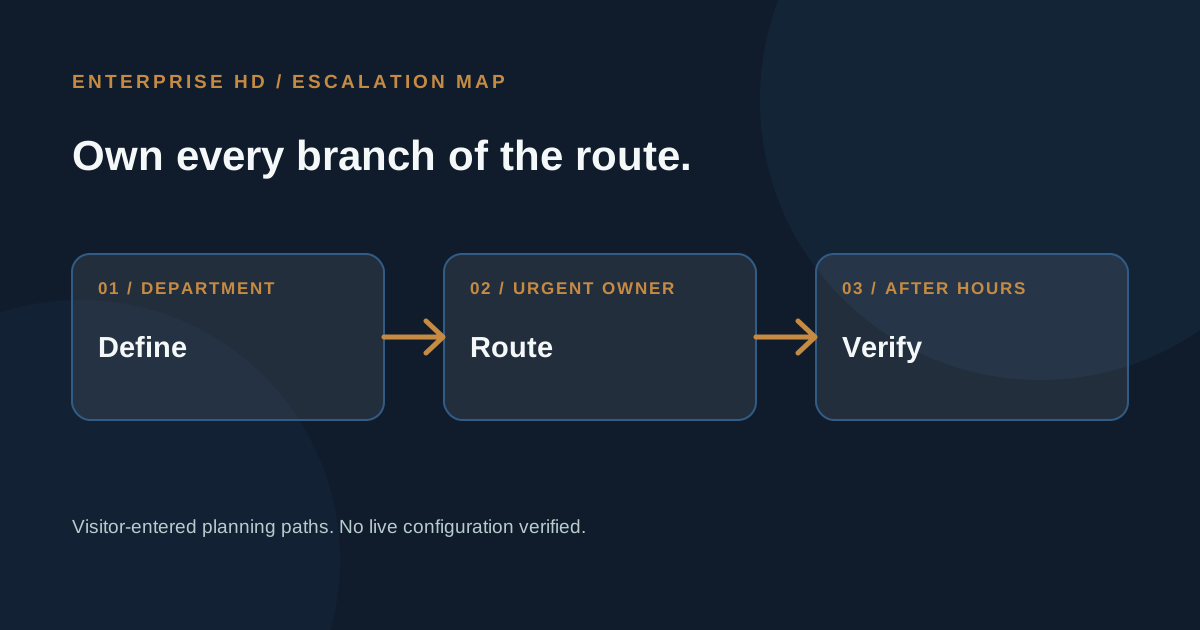
01 · Enter departments
Name the owners for each branch.
List up to four inbound lines or departments. Missing owners and unapproved rules appear as open decisions. Use your internal policy and duty roster to decide what belongs in each field.
Self-reported branch review
Unresolved route decisions
Decisions to confirm
02 · Govern the change
What makes the rule ready to release?
Use this worksheet with department owners and the policy approver. Notes stay on this page until you copy or print them.
Urgent trigger
Policy approver
Failed handoff
How the review works
A branch inventory, not a compliance verdict.
What is counted
For each entered department, an empty standard, urgent or after-hours owner is one review point. A rule not marked approved is one more. The total is a count of review points, not a risk score.
What remains unverified
This page cannot confirm policy compliance, staffing, queue availability, caller identity, warm handoff, or a live system. Review and test with operations and policy owners before changing a production route.
Design for enterprise scale
Bring the branches to a routing briefing.
Enterprise HD can discuss consistent multi-department inbound handling and human handoff. Your team remains the authority for policy and release approval.
Put your plan in context
Read a related guide and a worked example →
Review your assumptions with the people who own the next step before configuring a live flow.